As expansion into the Southeast Asian market and cross-border access scenarios increase,“ Malaysian server “Is it effective?” has become the primary question for companies when evaluating regional deployment. Choosing the right host type affects both access latency and user experience, as well as compliance, data sovereignty, and long-term operational costs. This article will focus on cloud servers and physical dedicated servers, comparing them one by one in terms of performance, networking, scalability, security, and ease of management, to provide practical references for decision-makers.
Cloud servers typically offer highly elastic allocation of computing and storage resources, supporting on-demand scaling and automated management, making them suitable for businesses with fluctuating traffic levels. For users evaluating whether “Malaysian servers are good,” cloud hosting allows for rapid deployment of local nodes, reducing time to go live and enabling load balancing. Its virtualization management, snapshot backup, and API-based operations also facilitate DevOps practices and the establishment of CI/CD pipelines.
The shared resource nature of cloud hosts may perform poorly under extreme IO or single-threaded performance requirements, and cost control in long-term high-concurrency scenarios needs to be evaluated. For scenarios such as finance, video encoding, or large databases that have strict requirements for latency or hardware-level isolation, cloud hosts need to be paired with dedicated virtual networks or high-performance instances to meet these needs. Overall, scalability and ease of management are the core attractions of cloud hosts.
Physical dedicated servers provide complete and exclusive hardware resources and network bandwidth, ensuring better control over performance stability, IO throughput, and latency jitter. For applications that require the highest predictable performance, hardware isolation, or customized hardware such as GPUs and NVMe arrays, physical dedicated servers are usually more suitable. Furthermore, exclusive resources are also easier to meet regulatory requirements in certain compliance and security audit scenarios.
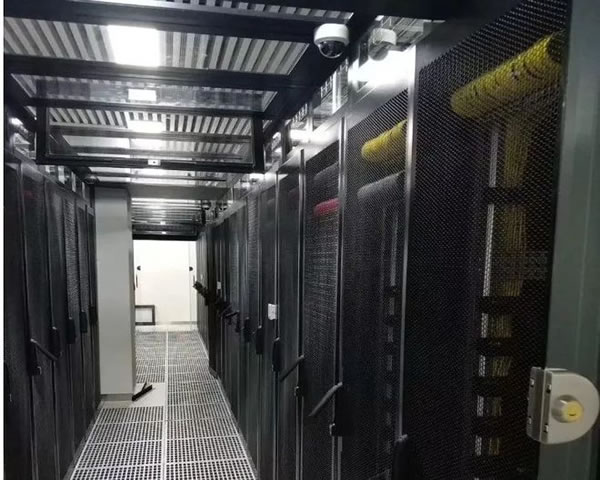
Physical servers are inferior to cloud hosts in terms of elasticity and deployment speed, as scaling up resources usually requires a longer preparation and maintenance period. The operational barriers and risks of single-point failures are also relatively higher, making it suitable for long-term projects with stable loads, performance sensitivity, or the need for hardware customization. For businesses that require frequent scaling or are involved in short-term activities, when choosing a physical dedicated server, it is necessary to evaluate the operations and maintenance capabilities as well as backup and disaster recovery strategies.
When judging whether “Malaysian servers are good,” the quality of the network connection, international exports, and ISP interconnections are crucial. Being close to target users can reduce latency and improve the SEO localization experience, but attention must also be paid to carrier bandwidth redundancy, direct backbone connections, and CDN coverage capabilities. Whether it’s a cloud server or a physical dedicated server, proper deployment of CDN and multi-point redundancy can significantly improve the stability of cross-border access and page loading speeds.
Safety and compliance are important factors in choosing a deployment location, as local storage and data flow in Malaysia affect considerations related to data sovereignty. Cloud platforms typically provide hosted security services and log auditing interfaces, whereas physical dedicated servers are more suitable for implementing isolation strategies and dedicated security devices. It is recommended to develop clear security and emergency response plans by considering business compliance requirements, backup and recovery strategies, as well as the capabilities of the operations team.
Overall, “Are Malaysian servers good?” depends on your business scenario: Those who need rapid deployment, scalability, and simple maintenance should choose cloud servers ; Suitable for physical dedicated servers that require high performance, hardware isolation, or compliance as a priority. It is recommended to first conduct traffic and performance assessments, network link tests, and compliance reviews. Make long-term investment decisions based on trial operation data, and consider hybrid architectures and multi-site disaster recovery to reduce risks.
- Latest articles
- Popular tags
-

Implementation Of Serverless Technology In Malaysia
Discuss the current implementation status and future development of serverless technology in Malaysia, and analyze its impact and advantages on enterprises. -
Reasons And Experience Of Choosing Malaysia Vps Cn2 Gia
explore the reasons and experience of choosing malaysia vps cn2 gia, understand its advantages and performance, and provide stable and reliable support for your website. -

Malaysia Cn2 Review Guides You To Understand The Best Network Choice
through the malaysia cn2 review, we help you understand the best network options and provide professional network service evaluation and suggestions.